

Market Entry: Why business delegations to African markets can only be just a first step
Every year, hundreds of business executives take flights to African cities like Nairobi, Cape Town, Lagos, Accra, Johannesburg, and others as part of trade missions and business delegations. They later return home with business cards, phone numbers, and pictures from their visits, and with their heads full of impressions. Some return excited about the prospects, others, perhaps, a bit confused. Some follow up on their missions; others may not.
Even so, sending a business delegation is one of the most widely used tools in international market identification and development. Export promotion agencies rely on it, chambers of commerce organize them every now and then, and government trade bodies budget for them annually. And yet, too often, these delegations are treated as ends in themselves, instead of what they really should be: one of the numerous means to an end.
Business delegations to African markets offer a useful first impression of a country. But they are only the opening move in a much longer game (the demanding market development journey). To translate these first impressions into contracts, sales, and local partnerships, companies need rigorous preparation, careful partner prequalification, and structured follow-up that goes well past just a single trip and follow-up emails.
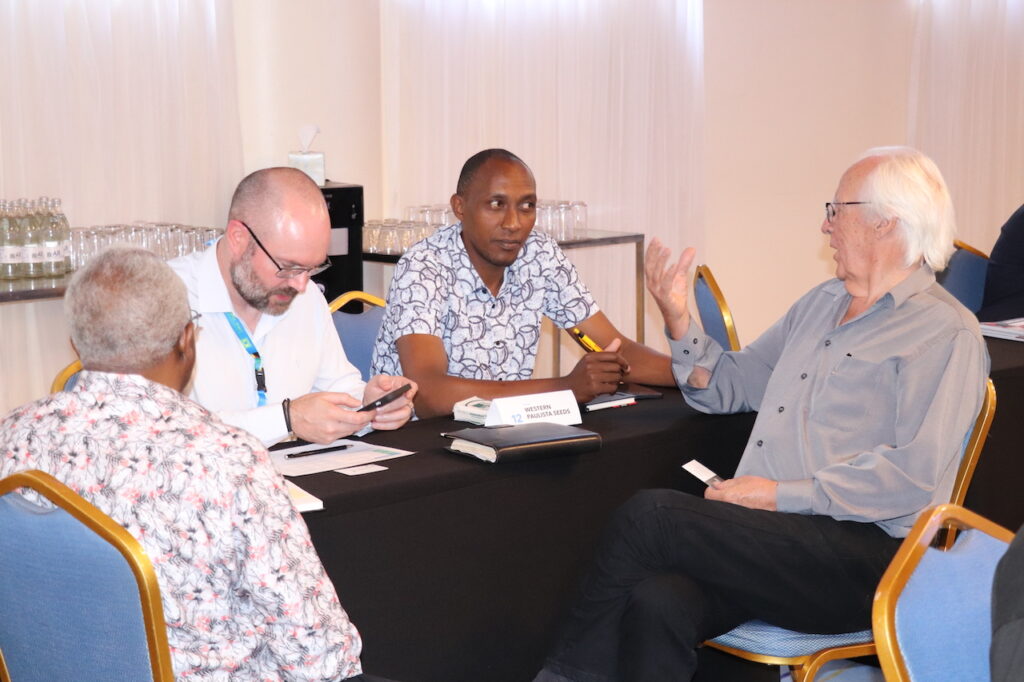
Why are delegations only just a first step?
A delegation format, while important, has a few limitations. Delegations compress a complex market into a few days of meetings, presentations, and site visits, which inevitably leads to an emphasis on breadth, and not so much depth. Participants often move from one meeting room to another without sufficient time to test assumptions, challenge statistics, or investigate how a potential partner really works in practice.
Many government-backed missions are also designed to serve different sectors at once. This means not every encounter is relevant to every company on the trip. Without additional work before and after the mission, this can create a misleading sense of ‘activity’ (many business cards collected, many photos taken) without much substance and real progress toward qualified opportunities.
Prequalifying meeting partners, not counting them
For prospective investors who treat delegations as a numbers exercise, success is often defined by how many people they manage to meet in three or four days. Often, organizing bodies report back on the number of B2B sessions completed, participating companies count business cards collected, or trade representatives cite the number of hours spent in productive dialogue. While these figures are not meaningless, they are not the right metrics to fully rely on, either.
In practice, the decisive factor is often not the volume of meetings but the relevance, authority, and credibility of each counterpart on the African side. And in African markets, where relationships sometimes take time to build, and trust is earned through constant presence more than brief visits, a lot more is required.
As a specialized advisory firm, at AMENA, we emphasize fact-based preparation, featuring sector mapping, local data sourcing, and expert interviews that identify which companies and institutions are well-positioned to act as distributors, clients, regulators, or joint venture partners. When we host business delegations, we combine program handling with sector reports and B2B matchmaking, which ensures that participants engage with prequalified partners whose interests and capabilities match the visiting companies’ strategies.
Research before the trip matters
Many companies still work with delegations with limited prior analysis of factors like market size, regulatory frameworks, or competitive intensity in their segment. This weakens the quality of their questions and engagements during meetings. Without a clear hypothesis of where value is, they risk being drawn to the most visible names or to sectors which host institutions happen to promote, instead of niches that match their own strengths.
But our general service portfolio, as AMENA, proves the alternative. We start by sizing the opportunity, conducting operational market assessments, and benchmarking the industry before clients commit to a specific entry route. When this groundwork precedes a delegation, the trip is, then, a focused validation exercise instead of a general exposure tour, and the meetings’ agenda mirrors explicit strategic choices.
Why emails are not enough as a follow-up
A common complaint among European companies after African trade missions is that ‘nothing happened’ once they returned home, even when conversations during the mission seemed promising. In many African markets, communication preferences differ. Contacts may consider phone calls and WhatsApp messages more practical than email. And long response times do not necessarily mean a lack of interest, but sometimes, competing priorities and bandwidth constraints.
IMD Business School, drawing on interviews with executives who operate across the continent, notes that personal relationships are the currency of business in Africa to a degree that many Western executives underestimate. A simple WhatsApp message could carry more relational weight than a formal email, and a phone call shows commitment differently from how a PDF proposal does. This relationship must be nurtured.
Effective follow-up after a delegation visit is, therefore, important and requires several things. First, it should be prompt, perhaps, within 48 to 72 hours of the meetings, while the conversation is still fresh on both sides. Second, it should be personalized and reference specific points discussed, not a generic template sent to all contacts. Third, it should propose a concrete next action, whether that is a follow-up call, a product sample, a site visit by the local partner, or a commercial proposal.
Contrariwise, if follow-up is limited to a few emails sent from headquarters and nothing more, opportunities often stall due to misaligned expectations, unclear next steps, or a simple misunderstanding of local business etiquette. This is why several chambers of commerce and advisory firms have built structured and focused follow-up services, including local calls to re-engage contacts, clarification of decision processes, and identification of new counterparts when initial leads prove incompatible.
As AMENA, we effectively bridge this post-mission gap. Operating in key African markets from offices in Kenya, Nigeria, Ghana, and South Africa, allows our team to follow up with potential partners and clients in person or through local channels after an initial delegation visit. Client testimonials show how we continue working months after first visits, providing market studies, partner identification, and implementation support that change exploratory interests into solid strategies.
Preparing the important second visit
A second visit to an African market should not simply repeat the delegation format with another round of introductory meetings. Instead, it should be framed as a working trip that focuses on shorter lists of counterparts, clearer decision agendas, and specific milestones such as pilot projects, distributor agreements, or regulatory clarifications.
Our ‘step-by-step, one-market-at-a-time’ approach is instructive here. After initial scoping and a first visit, consultants refine the project scope, confirm the client’s mandate, and then pursue material tasks on the ground, updating the client throughout. A well-prepared second visit, therefore, builds on documented insights from the first mission, our updated sector data, and feedback from local follow-up, which together support more substantive negotiations.
Continuous presence and in-market representation
African markets are dynamic environments. Regulations, competitors and customer needs can change within months, not even years! Companies solely relying on occasional delegations struggle to keep pace with these changes and to respond quickly when an opportunity moves from exploratory discussion to a real project.
Firms that combine delegations with in-market representation, therefore, attain a sustained presence that builds relationships, addresses operational issues, and maintains visibility with key stakeholders. We offer these business development and sales support systems, including establishing sales channels and acting as a local representative, which helps prospective international clients remain present in the market between visits and react fast when conditions change.
Applicable recommendations for businesses
To use delegations to African markets effectively as a first step, companies can apply these few practical principles drawn from our work and from current practices across trade promotion agencies.
- Define clear objectives before applying for a mission. This involves prospecting, partner search, project acceleration, or policy dialogue.
- Commission the targeted market and sector studies to identify attractive segments and priority countries before travelling.
- Work with local advisors to pre-qualify meeting partners, prioritizing decision-makers and firms with proven track records in your value chain.
- Use the delegation to test hypotheses, validate numbers, and assess cultural fit, not to ‘win deals on the spot.’
- Agree on explicit next steps with each promising contact, including timelines and preferred communication channels, before leaving the country.
- Plan and budget for structured follow-up through local phone calls, site visits, and, likely, a local representative.
- Treat the second visit as a working mission aimed at concrete agreements or pilots, backed by updated market data and refined partner shortlists.
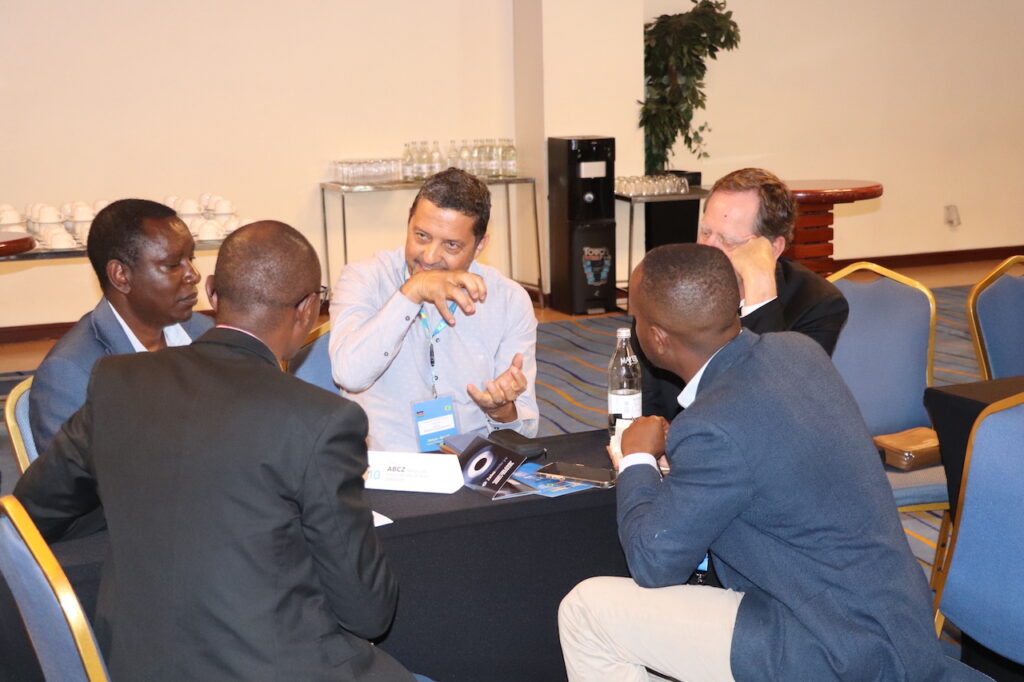
Why AMENA AFRICA is well placed to support the full continuum
The market entry drive in Africa is not a one-off event, but a continuum. As a pan-African market advisory firm with offices in different key markets, we combine local expertise, intercultural understanding, and a hands-on approach to project execution throughout our full scope of services.
Our integrated model exemplifies a key insight that many first-time investors in African markets often underestimate, which is that sustainable growth on the continent is not achieved through one-off or occasional missions, but continuous, informed, and locally-organized engagements.
Worth noting is that when business delegations are treated as a disciplined first step within such a much larger framework, they easily open the door to Africa’s diverse opportunities without creating false expectations about what a single trip can deliver.
Browse more content!
- All
- Africa Affairs
- Growth Strategy
- Market Entry
Building local partnerships for sustainable business growth in Nigeria

The Elephant Not in the Room: How Leaders Are Responding to America’s Absence from the G20

The role of AI in shaping market-entry strategies for African businesses

Navigating Regulatory and Operational Challenges in African Markets